HDPE Milk Bottle


Product Overview
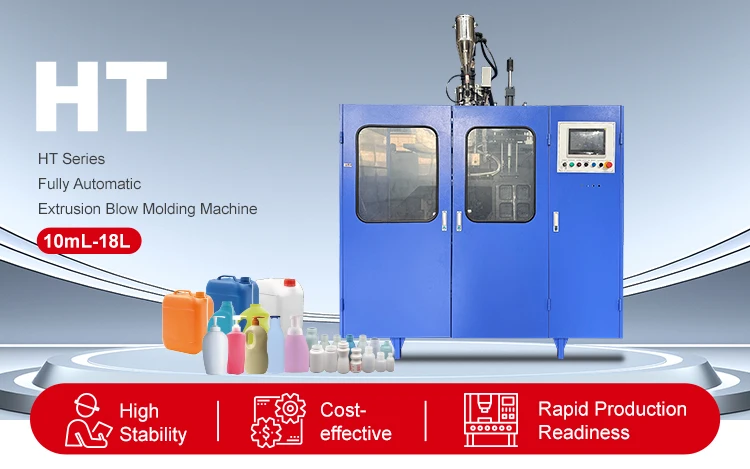
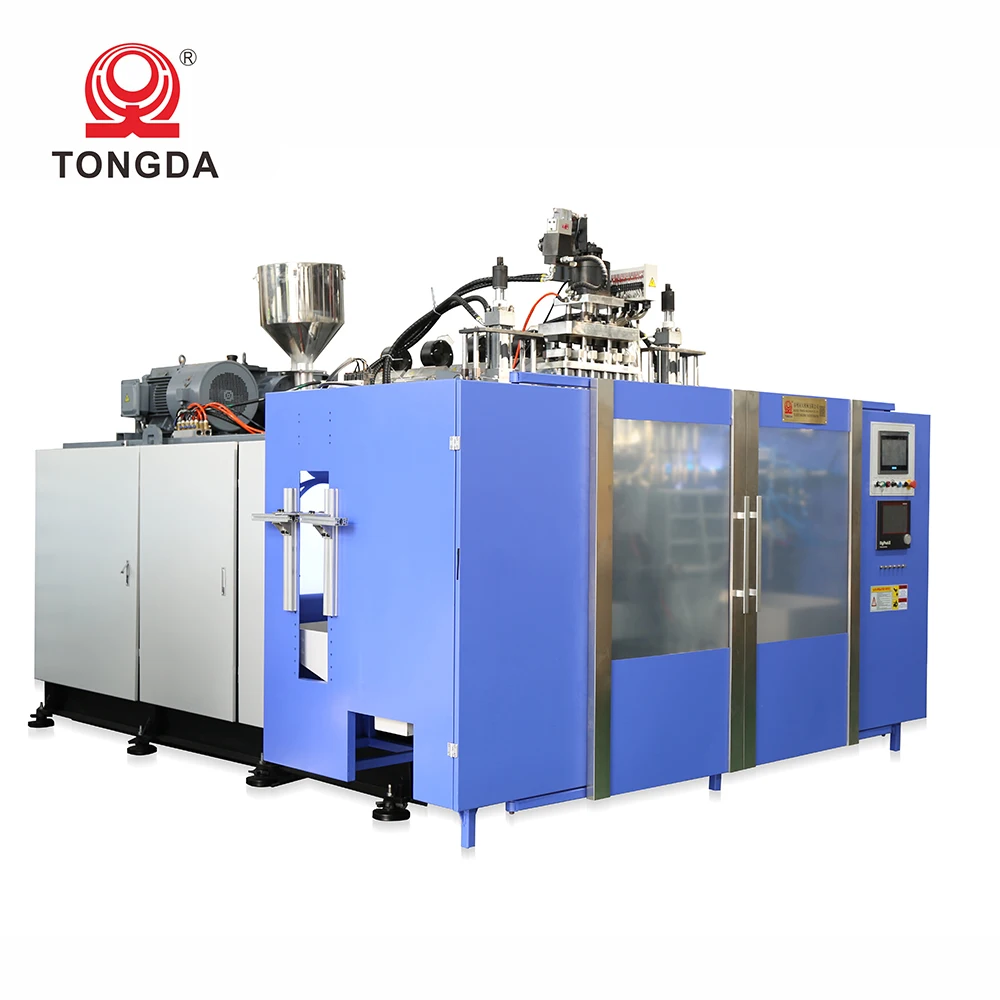
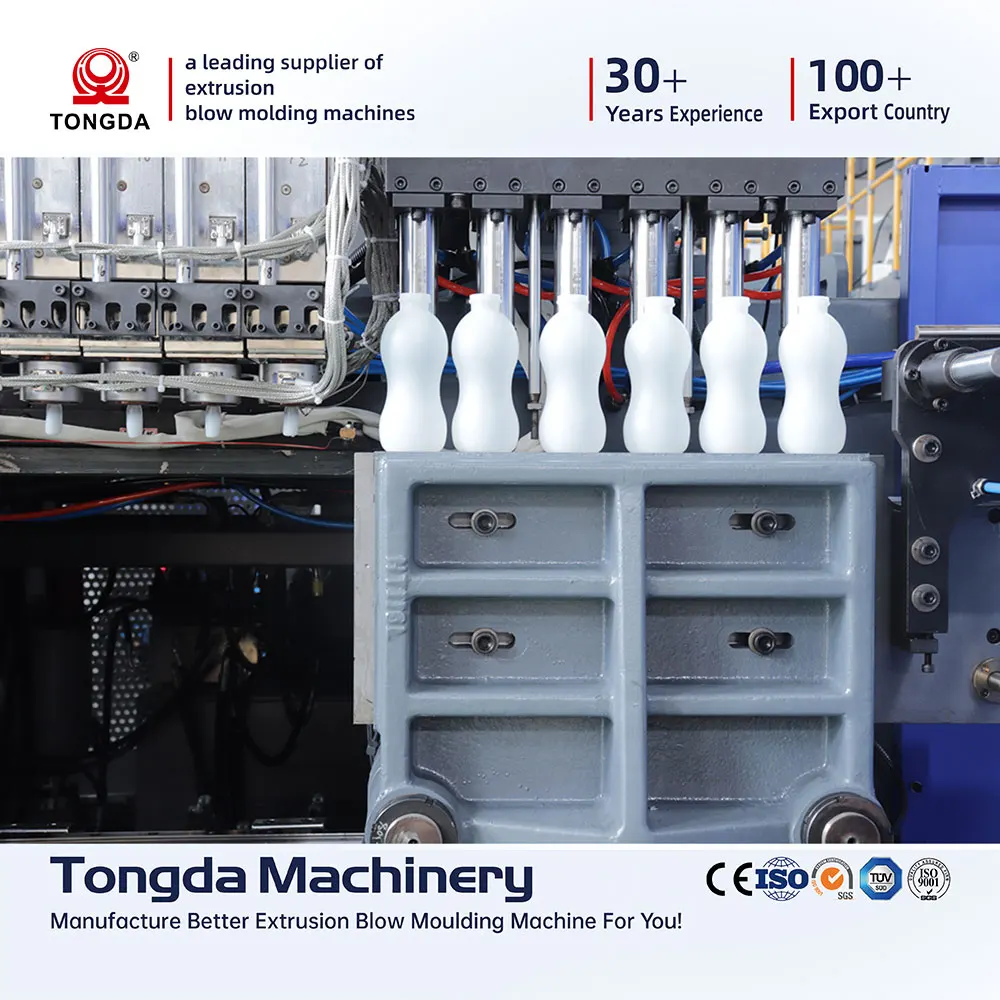
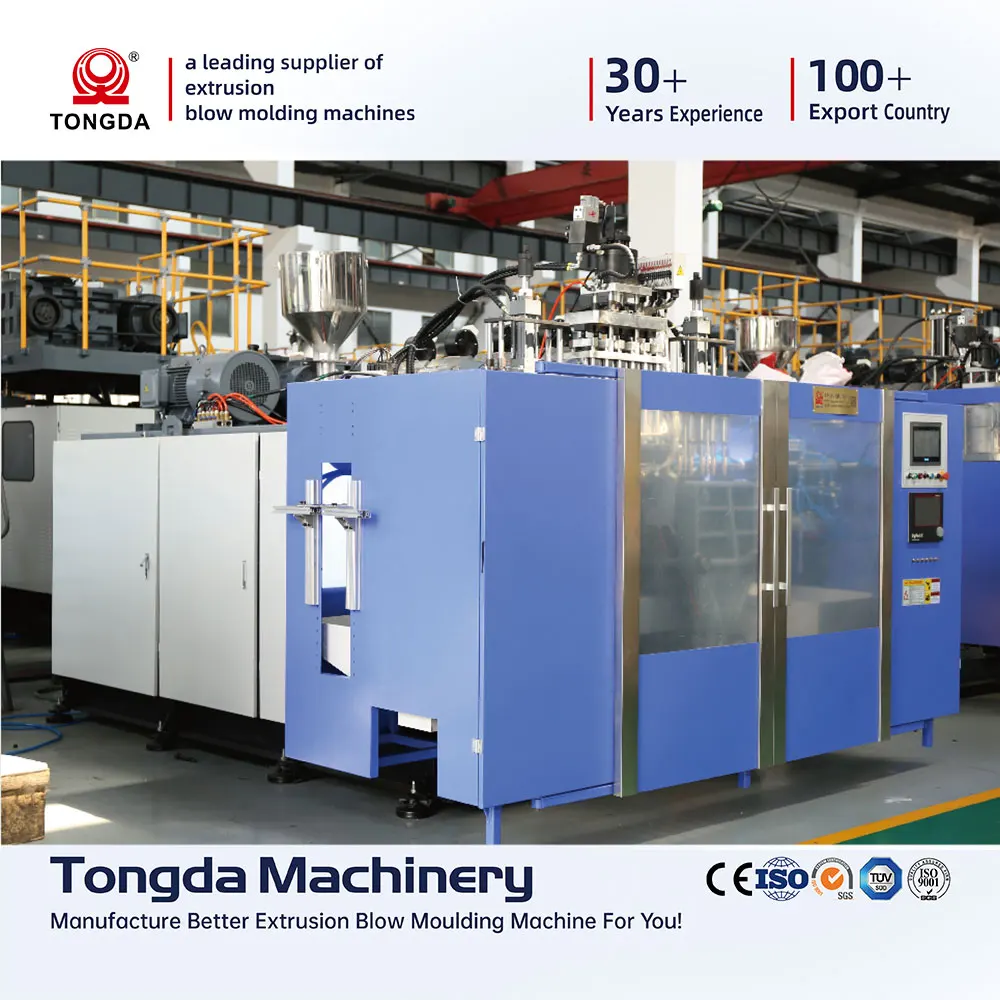
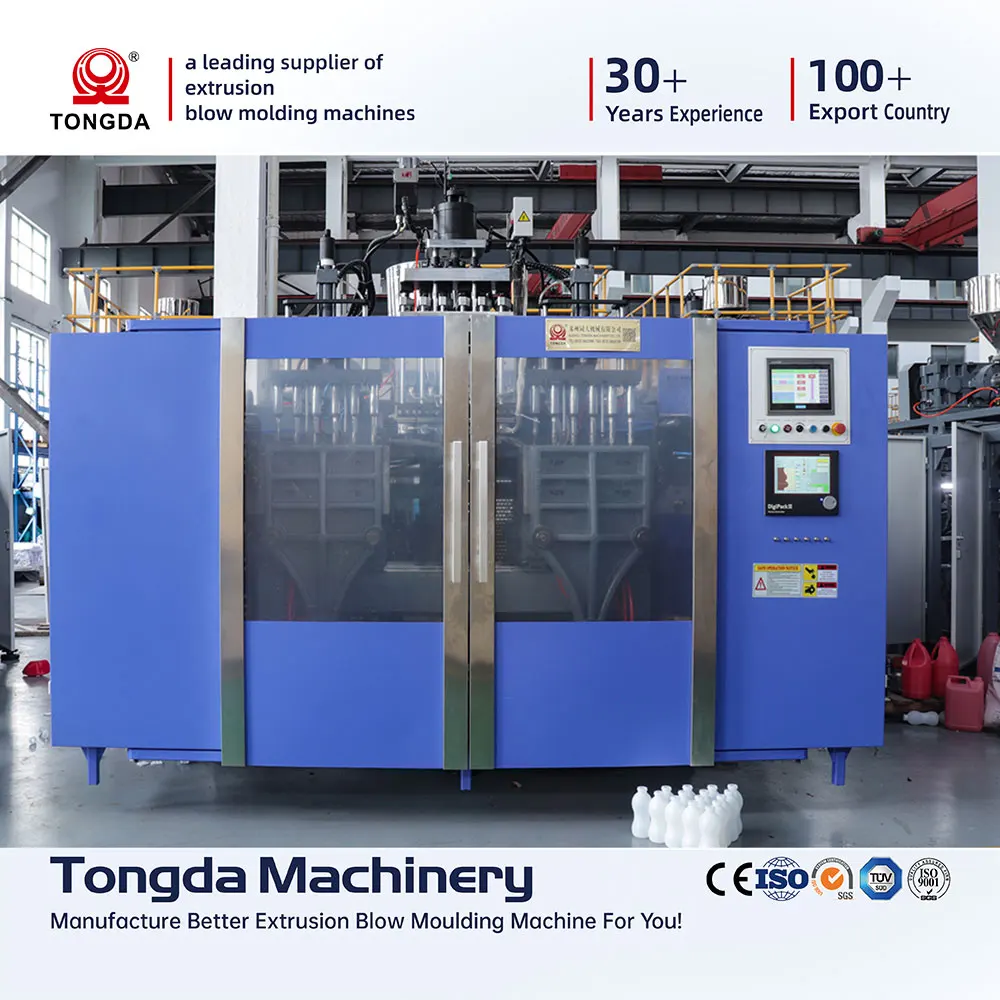
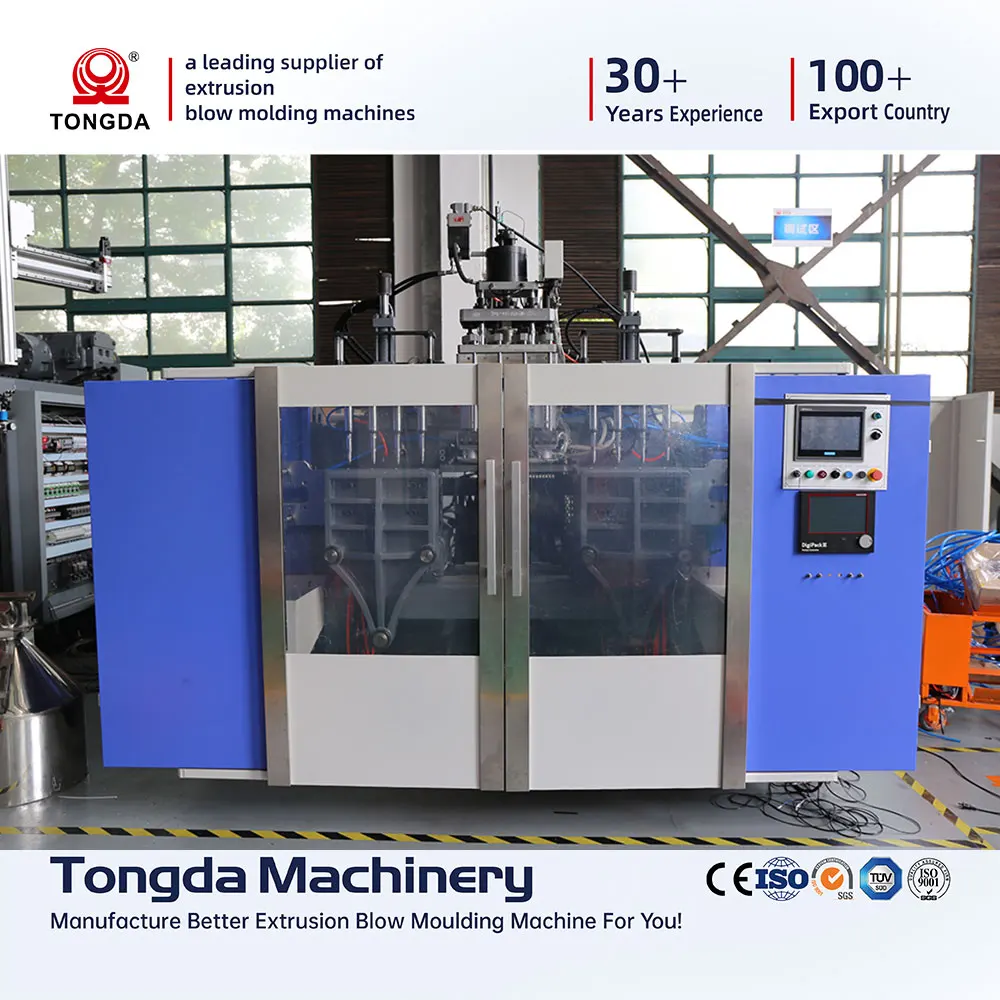
As an engineer evaluating HDPE extrusion blow molding equipment for a food packaging line, the specification that matters first is not the headline dry-cycle speed — it is whether the machine maintains container weight variation within the tolerance your production quality plan requires across a full eight-hour shift, not just during a short trial run. The Automatic Kids HDPE Milk Bottles Make Extrusion Blow Molding Machine from Suzhou Tongda Machinery, marketed as the HT Series, is built around this production reality. Four model variants — HTll-3L/6, HTll-3L/4, HTll-6L/6, and HTll-6L/4 — cover container volumes from 0.35 L to 1 L with a double-station configuration that allows simultaneous parison extrusion and mold clamping at two positions, eliminating the idle interval of single-station designs. Each unit ships as a pre-assembled unibody frame, reducing on-site installation to utility connections and mold mounting rather than mechanical assembly.
Technical Specifications
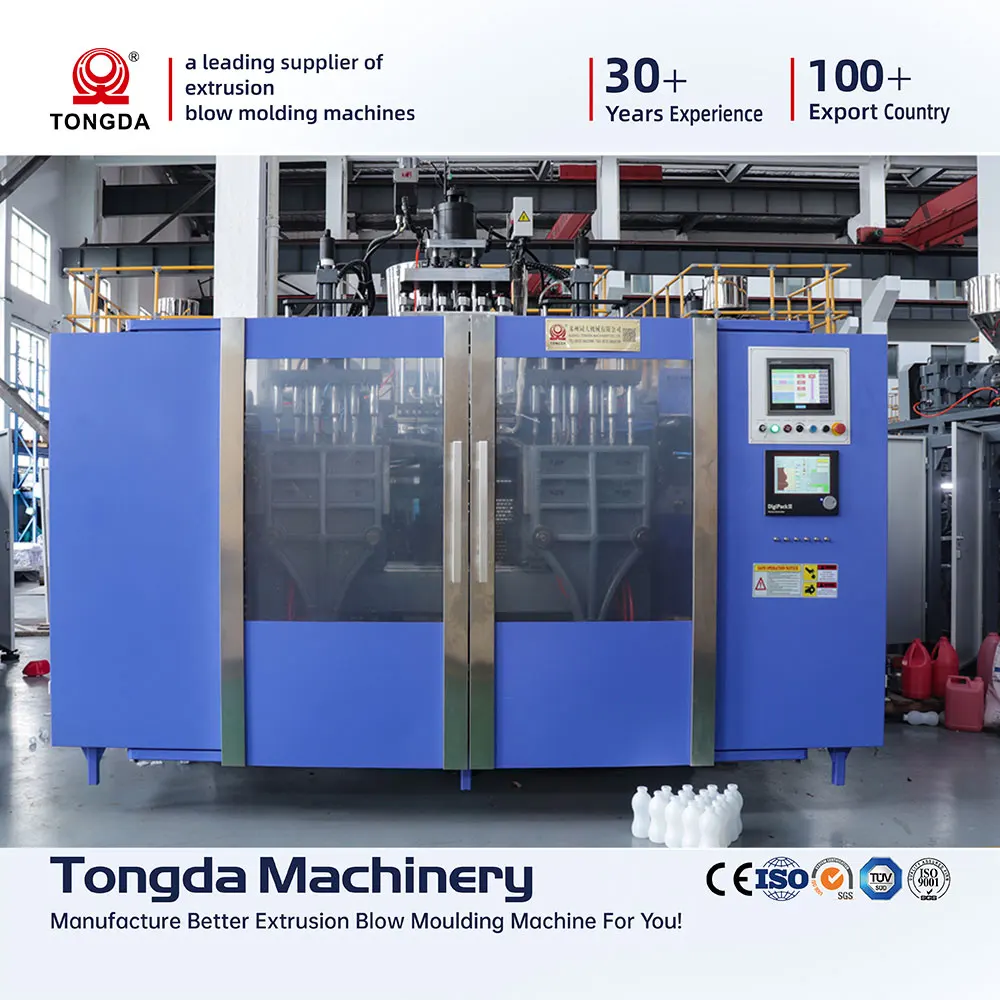
For buyers sourcing the Automatic Kids HDPE Milk Bottles Make Extrusion Blow Molding Machine for a dairy packaging installation, confirm that target mold geometry falls within the selected model's platen distance and mold-moving stroke envelope before committing to a model choice.
| Parameter | Units | HTll-3L/6 | HTll-3L/4 | HTll-6L/6 | HTll-6L/4 |
|---|---|---|---|---|---|
| Station | — | Double | Double | ||
| Max. Product Volume | L | 0.35 | 0.6 | 0.6 | 1 |
| Dry Cycle | PC/H | 800 × 2 | 700 × 2 | ||
| HDPE Output | KG/H | 85 | 110 | ||
| Machine Weight | T | 7 | 8 | ||
| Machine Size (L×W×H) | m | 3.8 × 2.7 × 2.5 | 4.2 × 3.2 × 2.7 | ||
| Platen Distance | mm | 160–320 | 160–400 | ||
| Mold Moving Stroke | mm | 500 | 600 | ||
| Clamping Force | KN | 70 | 110 | ||
| Screw Diameter | mm | 70 | 80 | ||
| Screw L/D Ratio | — | 25:1 | 25:1 | ||
| Screw Heating Power | KW | 13.2 | 19 | ||
| No. of Heating Zones | — | 3 | 4 | ||
| Screw Motor Power | KW | 22 | 30 | ||
| Hydraulic Pump Power | KW | 11 | 15 | ||
| Total Power | KW | 60 | 78 | ||
| Max. Mold Size (W×H) | mm | 450 × 250 | 590 × 300 | ||
HTll-3L models: 85 KG/H HDPE output, 70 mm screw, 25:1 L/D, three heating zones, 60 KW total power. HTll-6L models: 110 KG/H output, 80 mm screw, 25:1 L/D, four heating zones, 78 KW total power. The platen distance ranges and maximum mold dimensions define the container geometry envelope each variant supports.
Key Features
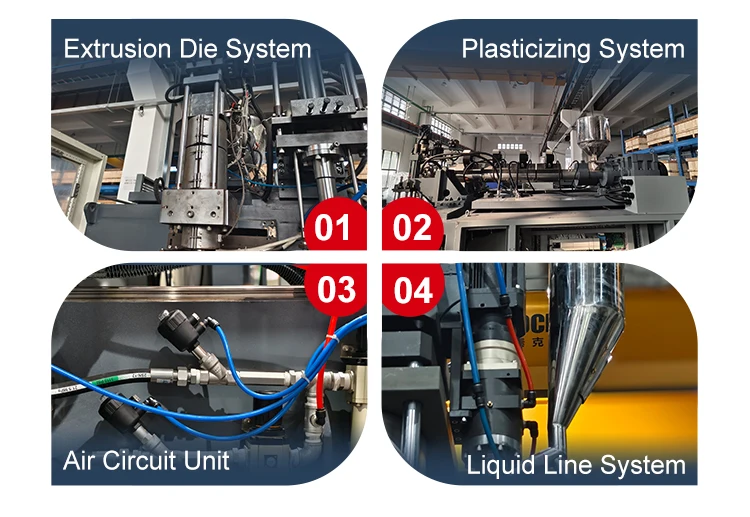
Extruder Output Stability and Container Weight Control
From a melt-flow engineering standpoint, the 25:1 screw L/D ratio — consistent across all four model variants — balances HDPE plasticization efficiency with residence time in a way that supports thermally uniform parison formation at rated output. In field deployments of this series, machines running at stable 85 or 110 KG/H throughput produce containers with tighter weight variation than machines exhibiting barrel temperature instability at comparable nominal output rates. So-called "high stability" is not an abstract claim: it translates specifically to a tighter distribution of container weights at the in-line checkweigher — which means fewer rejects and lower material waste per production hour. This applies under stable resin-lot conditions; melt flow index variation between resin batches typically requires brief parameter adjustment at each lot changeover.
Clamping System and Pinch-Line Quality
The 70 KN clamping force on HTll-3L models and 110 KN on HTll-6L models seal the mold halves reliably during the blow phase. Clamping force determines the pinch-line integrity at the container base — the structural point under fill-weight and drop-test loading. For dairy packaging containers that must pass drop-fill tests, this specification deserves explicit verification during factory acceptance: a hydraulic clamping system that appears fully functional during a two-hour dry-run acceptance may develop micro-leaks under sustained load that only become visible during the first weeks of continuous production operation.
Application Scenarios
Children's Dairy Packaging and Food-Grade Containers
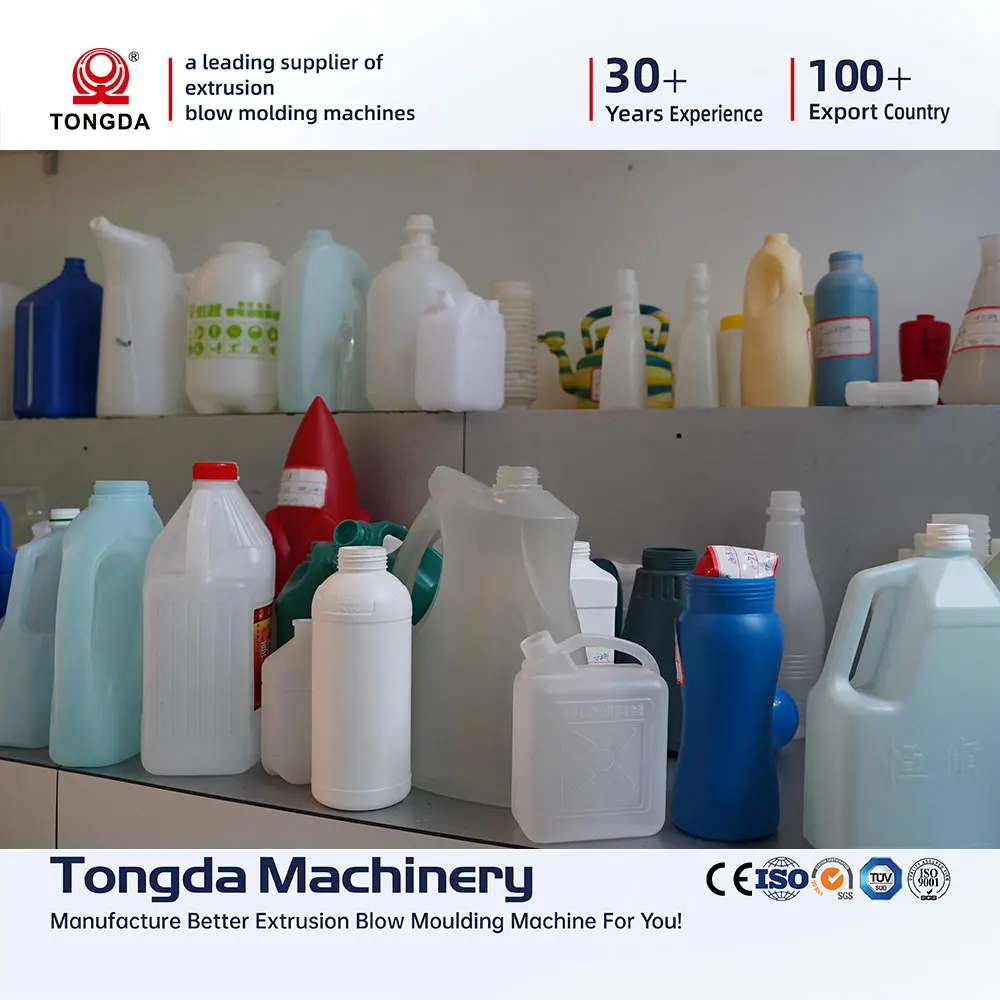
The Automatic Kids HDPE Milk Bottles Make Extrusion Blow Molding Machine covers 0.35 L to 1 L — the volume range for children's milk bottles, portion-format dairy drinks, and small food-grade bottle packaging. The machine processes HDPE resins compatible with food-contact material grades. For buyers supplying containers to regulated food markets, the relevant compliance decision is on the resin selection side: the HDPE grade used must meet applicable food contact regulations in each target distribution market, independent of the machine specification itself.
Civil Chemical and Industrial Hollow Container Production
The HT Series was originally developed for civil and industrial chemical container applications — household cleaning products, agricultural liquids, and personal care packaging. The seamless one-piece blow-molded container avoids weld-line vulnerabilities that affect some alternative forming processes, which is a structural advantage when fill materials include solvents or surfactants that could stress adhesive joints over time.
Company Background and Certifications
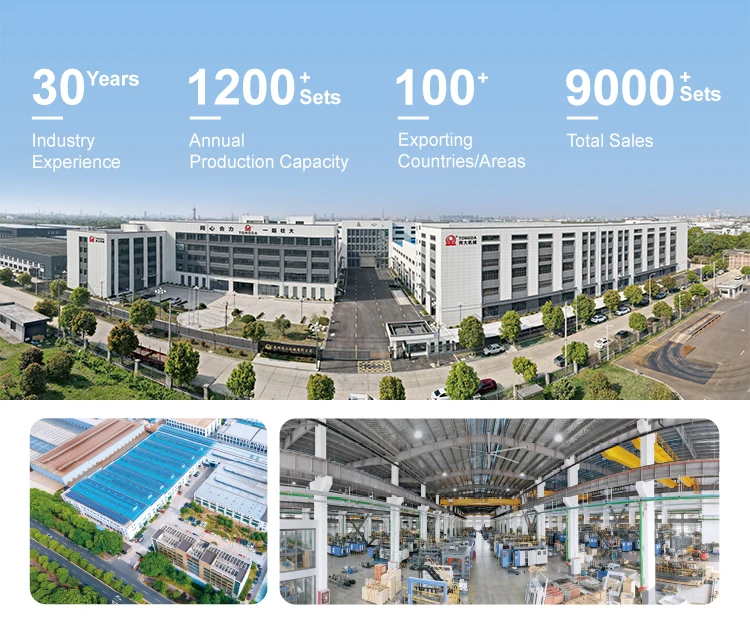
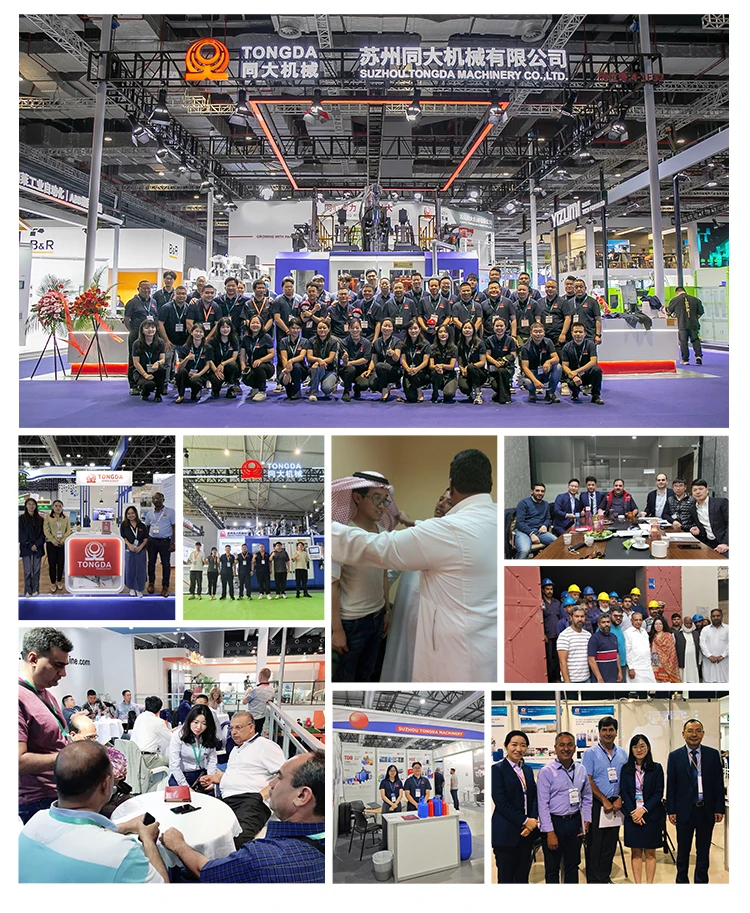
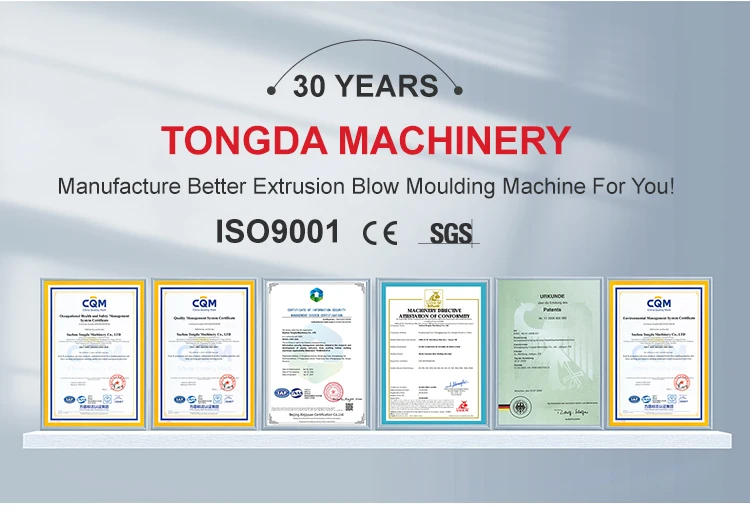
Suzhou Tongda Machinery Co., Ltd., founded in 1999, has ranked among China's top three extrusion blow molding equipment manufacturers for fifteen consecutive years and serves as Vice President Unit of the China Plastics Machinery Industry Association. Each Automatic Kids HDPE Milk Bottles Make Extrusion Blow Molding Machine unit undergoes documented quality inspection of core structural components before leaving the Suzhou factory. CE, ISO 9001 (TUV and SGS verified), and related certifications are held. Machines have been deployed across more than 100 export countries over 27 years in chemical, food packaging, automotive, agricultural, medical, and logistics applications.
CE marking confirms conformity with applicable European machinery directives. ISO 9001, TUV, and SGS documentation typically satisfies standard supplier qualification checklists for large industrial buyers in food packaging and chemical sectors. Current certificate scope and issue dates should be verified at the time of purchase for import-market compliance purposes.
Acceptance Verification Guidance
When accepting the Automatic Kids HDPE Milk Bottles Make Extrusion Blow Molding Machine at the factory or installation site, the following checks go beyond what a standard dry-run confirms:
- Container weight at thermal steady state: Collect weight samples after at least 30 continuous production minutes — not after a cold start. Early-cycle weights may not reflect the extruder's stable operating temperature.
- Hydraulic circuit under full clamping load: Inspect all connections and seals while operating under full clamping force. Minor leaks invisible at idle may develop into disruptions during continuous two-shift production.
- Mold cooling zone temperatures: Verify inlet and return temperatures across all mold cooling circuits before wall-thickness validation. Uneven cooling is the most common source of wall-thickness variation that passes acceptance but generates production rejects later.
- Process parameter documentation: Record all validated parameters at acceptance. This baseline enables precise restoration after transport and is the primary troubleshooting reference during the production ramp-up period.
A two-to-four-week parameter adjustment period after initial startup is normal and expected — it reflects the iterative optimization of machine settings to the specific resin grade and site conditions, not a machine deficiency.