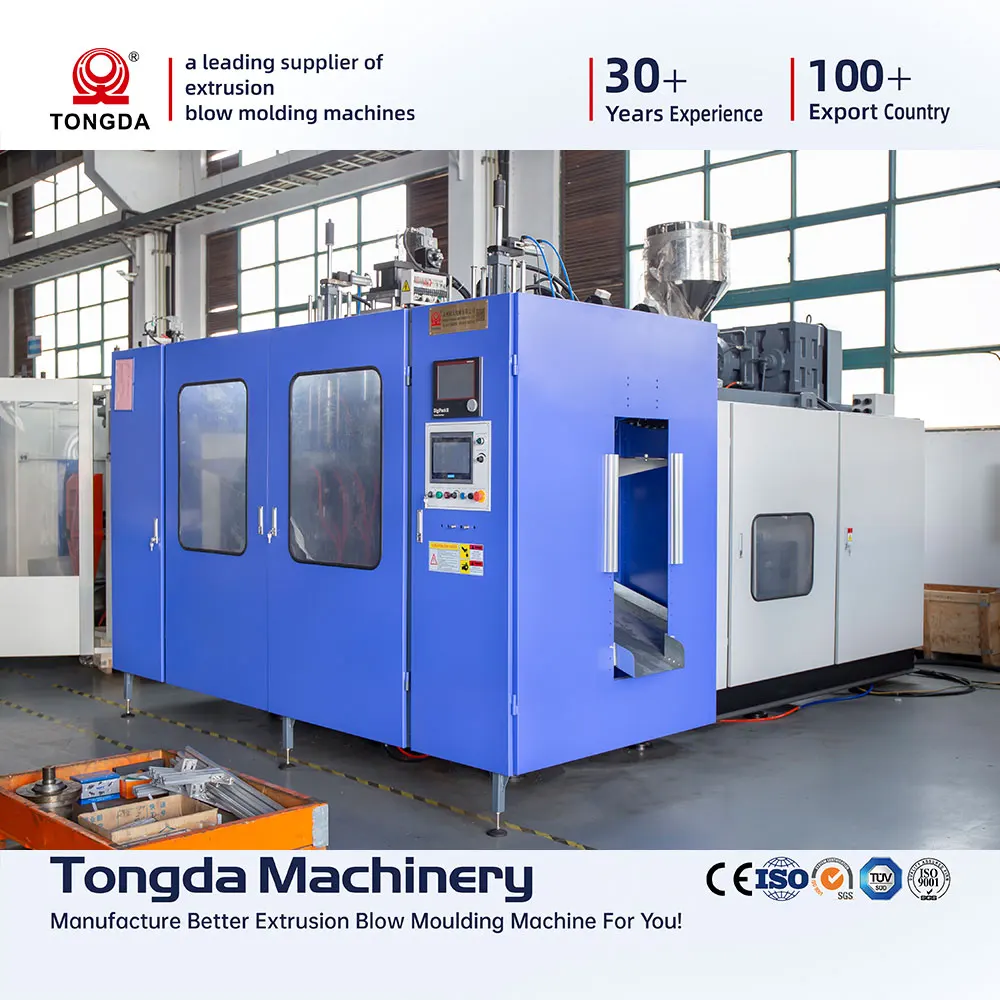
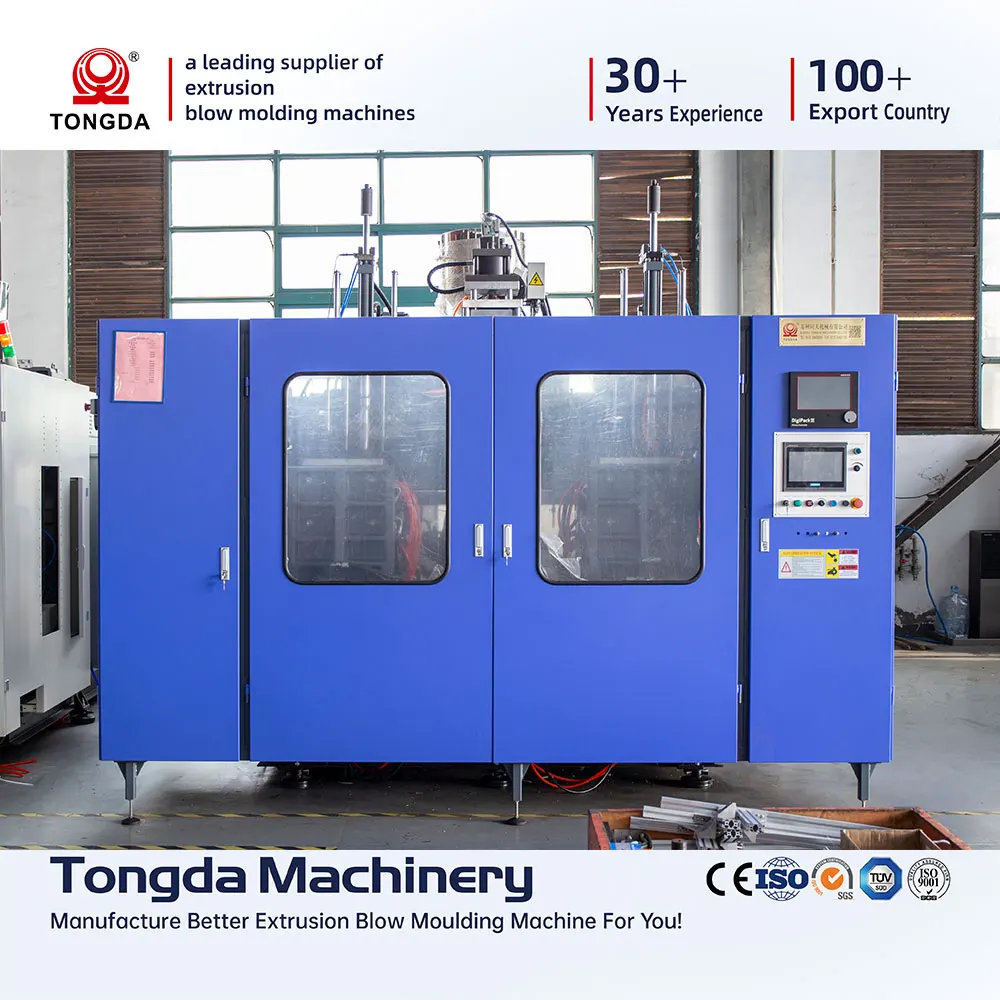
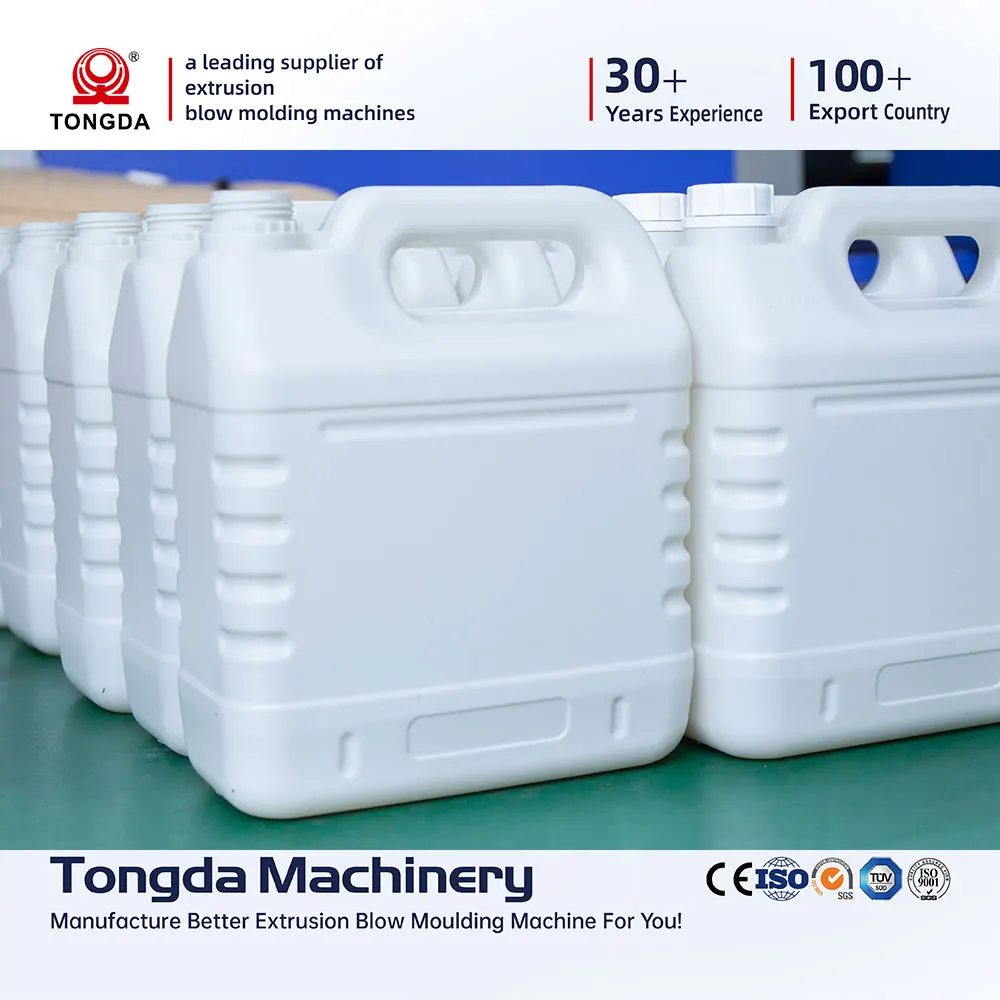
HTLL-12L HDPE Oil Bottle


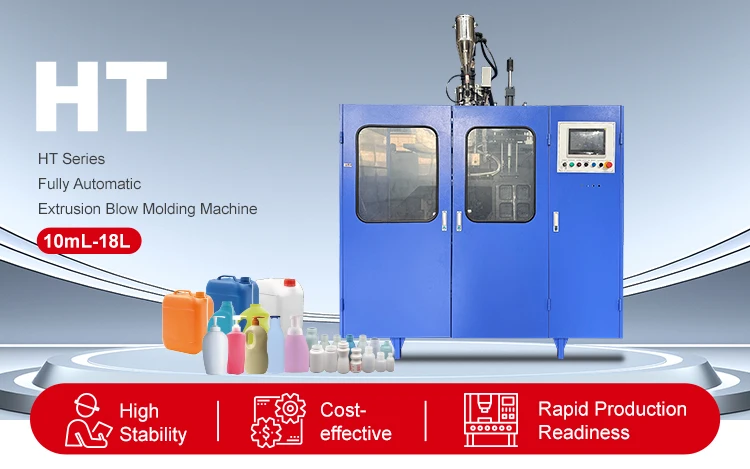
HTll-12L HDPE Plastic Engine Oil Lubricant Barrel Drum Bottle Making 2 Layers Single Extrusion Blow Molding Machine
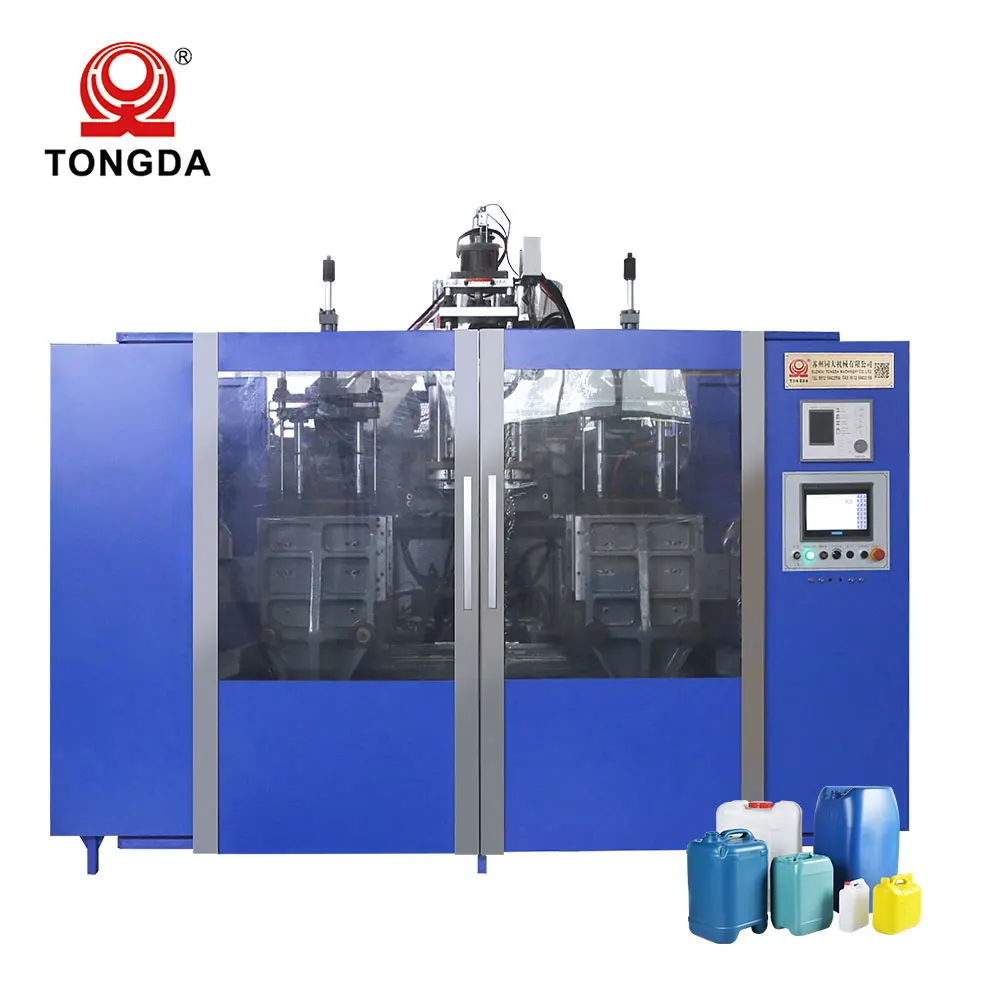
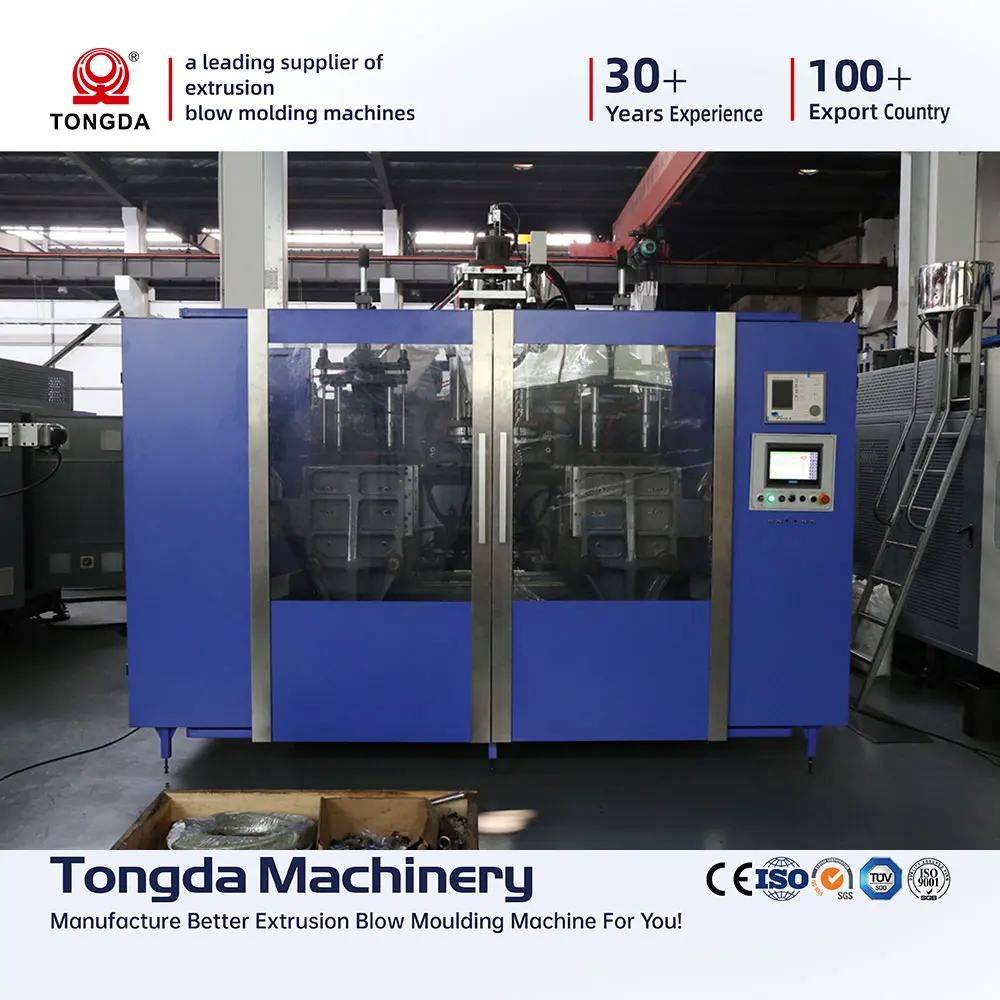
The HTll-12L HDPE Plastic Engine Oil Lubricant Barrel Drum Bottle Making 2 Layers Single Extrusion Blow Molding Machine is built on the HT series platform, a design with approximately two decades of market validation in civil and industrial chemical container production. Engineered for hollow HDPE products including engine oil barrels, lubricant drums, and chemical packaging bottles up to 12 liters, this machine serves operations where output consistency and minimal product weight variation are essential. The double-station unibody configuration delivers 130 kg/h rated HDPE throughput with a simplified installation path suited to continuous production environments.
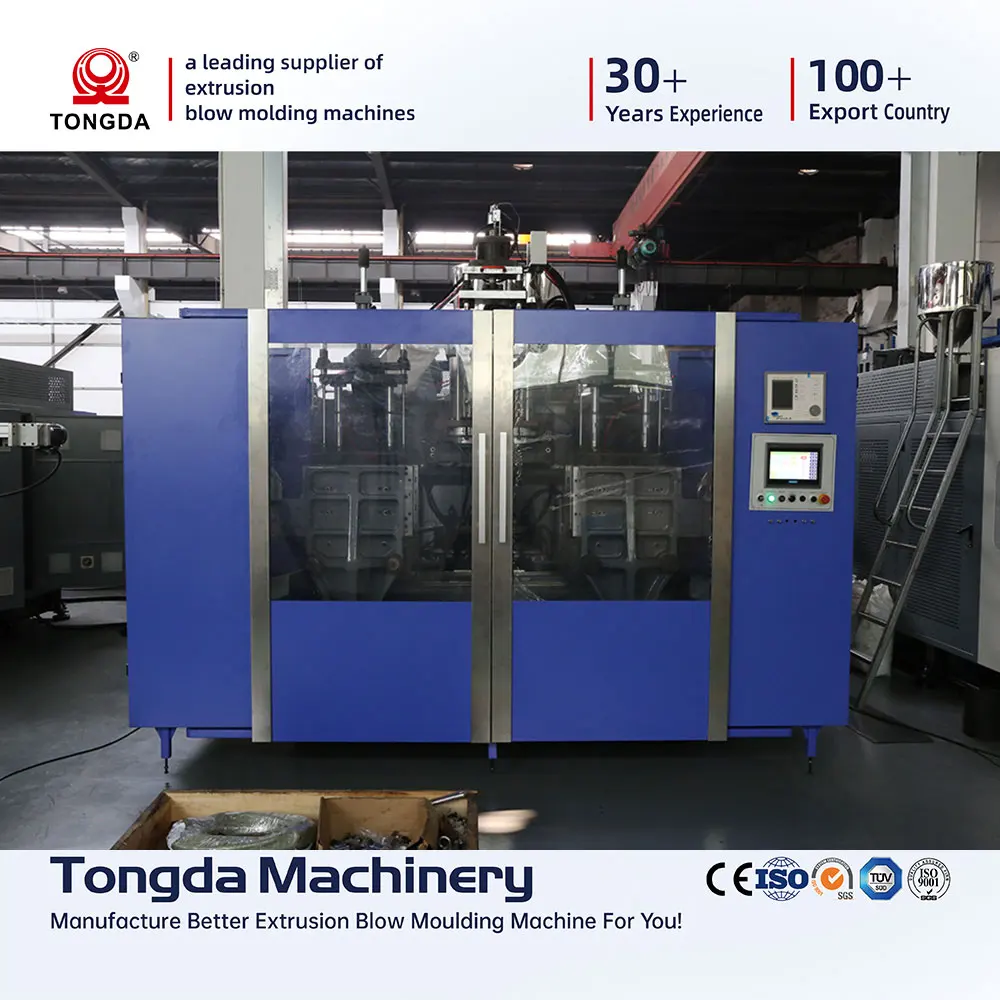
Technical Specifications
All parameters below are from the manufacturer's verified data sheet for the HTll-12L. Cross-reference against your mold dimensions, production volume targets, and utility requirements before procurement.
| Item | Unit | HTll-12L |
|---|---|---|
| Station | — | Double |
| Max. Product Volume | L | 12 |
| Dry Cycle | PC/H | 700×2 |
| Output of HDPE | KG/H | 130 |
| Weight of Machine | T | 9 |
| Machine Dimensions (L×W×H) | m | 4.5×3.0×3.2 |
| Platen Distance | MM | 240–620 |
| Mold Moving Stroke | MM | 550 |
| Clamping Force | KN | 110 |
| Screw Diameter | MM | 90 |
| Screw Length/Diameter Ratio | — | 25:1 |
| Screw Heating Power | KW | 17.4 |
| Number of Heating Zones | — | 4 |
| Screw Motor Power | KW | 37 |
| Hydraulic Pump Driving Power | KW | 15 |
| Total Power | KW | 78.5 |
| Max. Mold Size (W×H) | mm | 540×500 |
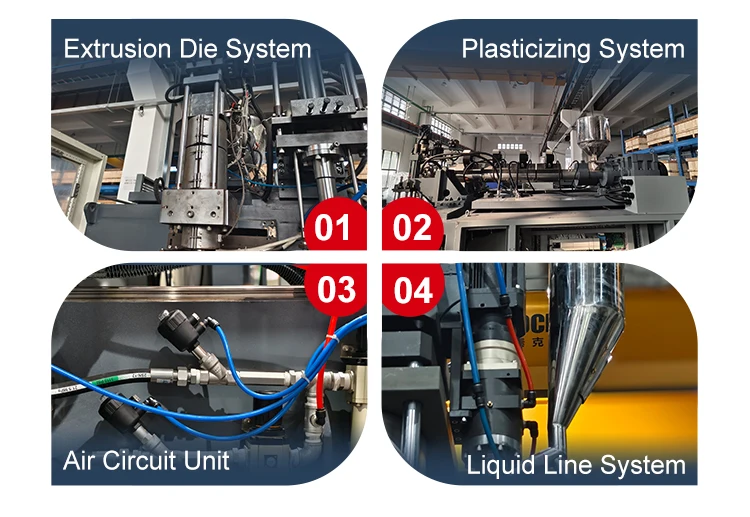
Key Technical Features
Double-Station Configuration for Production Efficiency
Both mold stations operate in parallel within one extrusion cycle, enabling a rated dry cycle of 700 pieces per hour per station. In continuous production, running at peak cycle speed typically trades wall thickness consistency for raw output. For standard HDPE oil barrels in the 10–12 liter range, calibrating the operating cycle time to your required wall thickness tolerance — typically ±0.5 mm to ±0.8 mm depending on the downstream filling and cap-sealing process — is more reliable than targeting maximum throughput.
2-Layer HDPE Extrusion for Chemical Barrier Performance
The 2-layer single extrusion head enables co-extrusion of HDPE with a secondary functional material layer, improving resistance to chemical permeation and degradation. For engine oil and lubricant applications, the outer HDPE layer provides structural rigidity while the inner layer composition is adjustable for chemical compatibility with the stored product. Unlike post-process interior coatings, the co-extruded wall layer is integral to the container structure, eliminating adhesion failure or delamination risks under temperature cycling or extended chemical exposure.
Unibody Frame for Simplified Commissioning
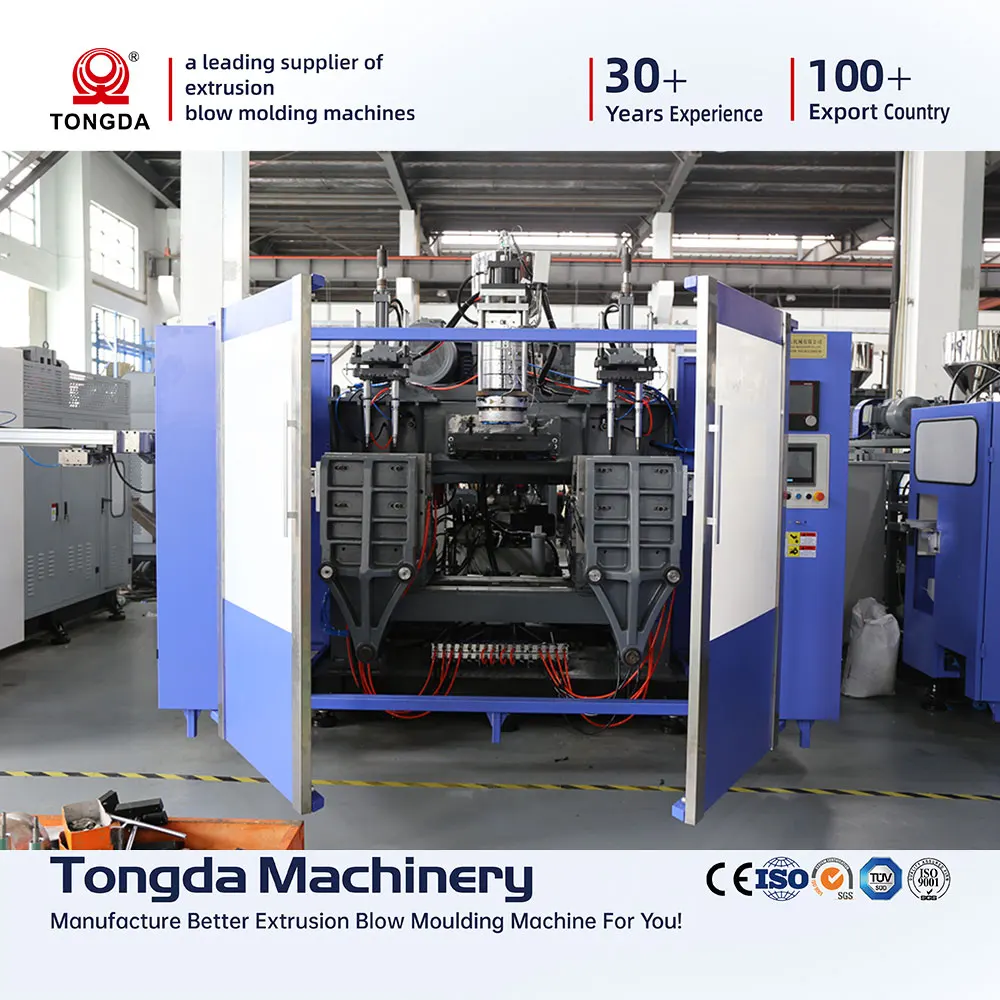
The unibody machine frame integrates the extruder, clamping unit, and hydraulic system into a single rigid structure, removing the foundation alignment and inter-component leveling steps required by modular-frame alternatives. For overseas buyers commissioning without local mechanical engineering support on-site, this configuration reduces installation complexity and shortens the path from machine delivery to initial production runs. Based on comparable unibody installations, mechanical alignment time can be reduced by one to two days relative to modular configurations.
Application Scenarios
Engine Oil and Lubricant Barrel Production
Manufacturers sourcing a HTll-12L HDPE Plastic Engine Oil Lubricant Barrel Drum Bottle Making 2 Layers Single Extrusion Blow Molding Machine for their container lines will find it suited for engine oil, lubricant, and petroleum-based product containers from 5 to 12 liters. The extrusion blow molding process inherently produces seamless, weld-free containers meeting chemical packaging leakage prevention requirements. The 110 KN clamping force and 240–620 mm platen distance accommodate standard barrel and drum mold geometries used in this market segment.
Industrial Chemical and Agricultural Container Manufacturing
The HTll-12L is also applicable for HDPE containers in chemical, petrochemical, and agricultural packaging segments, including industrial cleaning agent containers and process chemical drums. The 2-layer extrusion capability supports manufacturers serving multiple markets with different chemical compatibility requirements — inner-layer material composition can be adjusted for different container specifications without changing the machine's core configuration. The chemical industry's seamless container integrity requirements align with the structural advantages of the extrusion blow molding process.
Differentiated Advantages
Blow molding equipment total cost of ownership extends well beyond acquisition price. Machine uptime, dimensional consistency, spare parts availability, and commissioning support are the variables that determine actual return on investment — factors not fully visible in specification sheets. The following documented advantages are relevant to procurement evaluation:
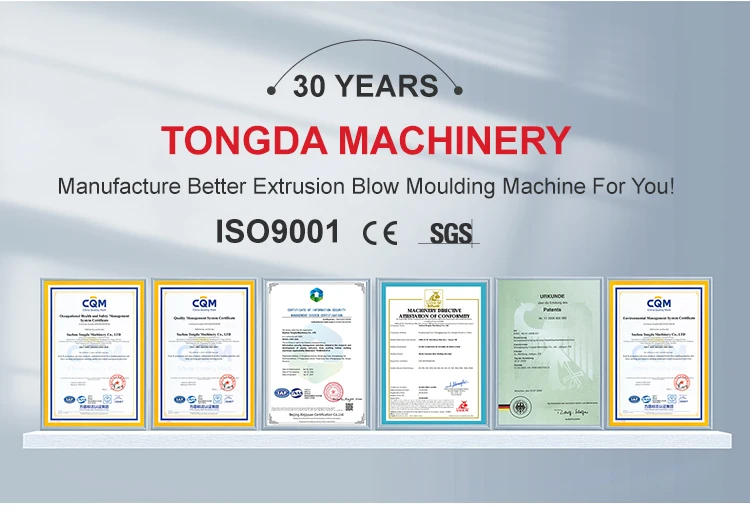
- Multi-Standard Certifications: CE, ISO 9001, TUV, and SGS certifications cover the supplier qualification documentation requirements of most export-oriented packaging manufacturers. CE compliance and ISO 9001 certification are frequently listed as minimum supplier audit requirements in European and North American markets.
- Established Platform Maturity: Equipment on a 20-year deployment platform carries more predictable maintenance profiles and lower first-year commissioning adjustment requirements than newly introduced designs. This risk reduction factor tends to be underweighted when initial acquisition cost dominates the selection process.
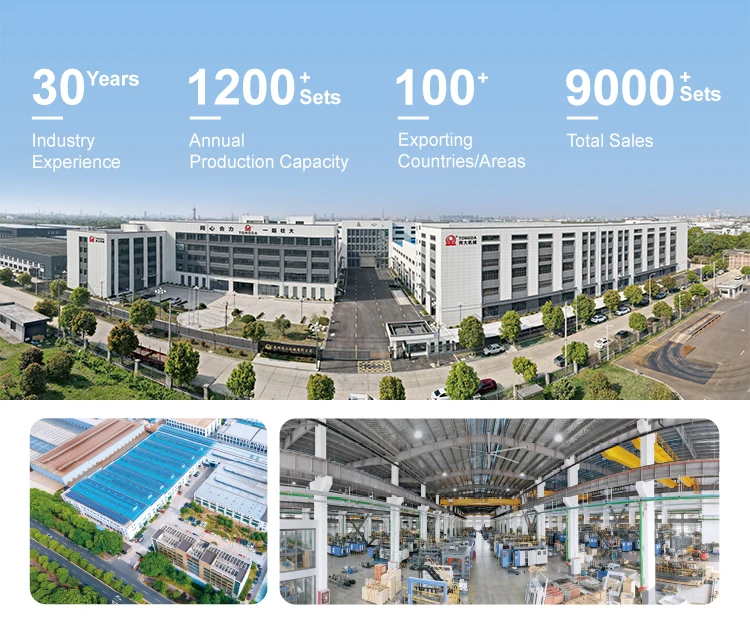
- Verified Industry Standing: Suzhou Tongda Machinery has ranked among the top three enterprises in China's extrusion blow molding equipment industry for 15 consecutive years and serves as Vice President unit of the China Plastics Machinery Industry Association — credentials verifiable through industry association records.
About Suzhou Tongda Machinery Co., Ltd.
Founded in 1999, Suzhou Tongda Machinery Co., Ltd. is a whole-plant intelligent manufacturing solutions supplier in the blow moulding machinery field. Over 27 years, the company has supplied equipment to chemical, automotive, agricultural, food packaging, medical, logistics, and other industrial sectors in more than 100 countries. R&D focus areas include parison sag control, cooling uniformity, and melt consistency — technical challenges central to large hollow product manufacturing applications.
Certifications and Quality Assurance
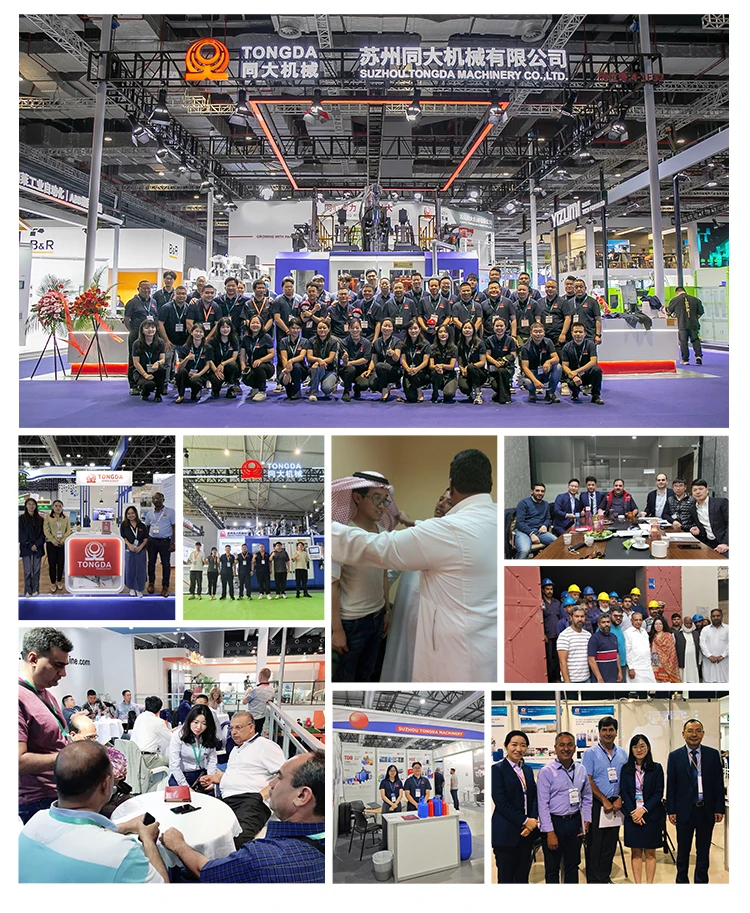
The HTll-12L holds CE, ISO 9001, TUV, and SGS certifications. ISO 9001 confirms quality management system operation with defined inspection checkpoints and traceability procedures — a baseline requirement for industrial equipment procurement in most international markets. CE marking confirms compliance with applicable European safety directives, relevant for buyers supplying EU-based customers or importing equipment into the European Union. For procurement teams requiring pre-purchase factory audits, Tongda's Suzhou manufacturing facility is available for on-site evaluation.